Clean, carefully composed imagery for exploration and education.
Morphology · Collections · Imaging · Systematics
Society for
Evolutionary
Parasite Systematics
Advancing parasite systematics through field biology, specimen-linked imaging, computational tools, and collaborative research.
Inaugural specimen
The organism comes first.
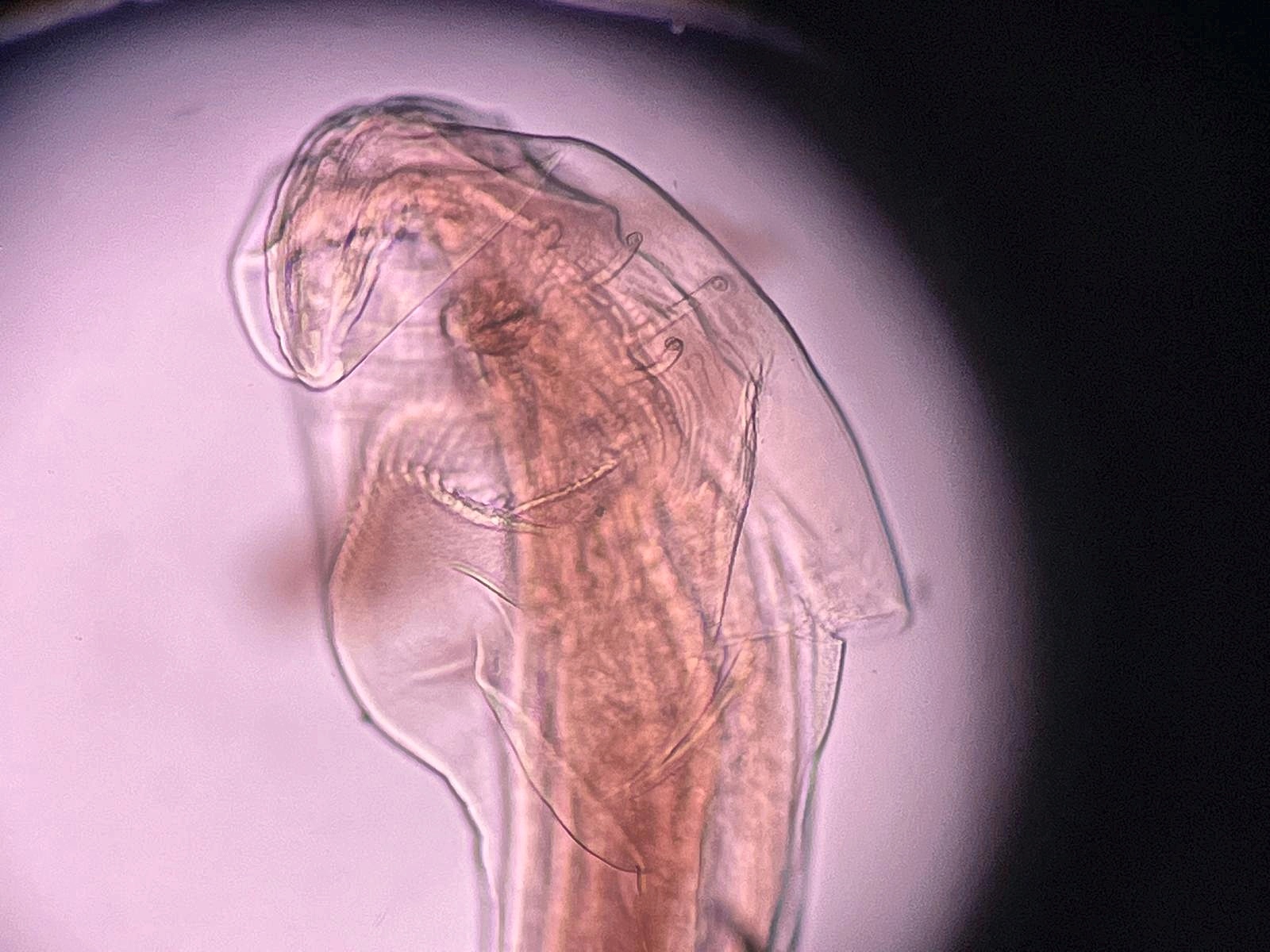
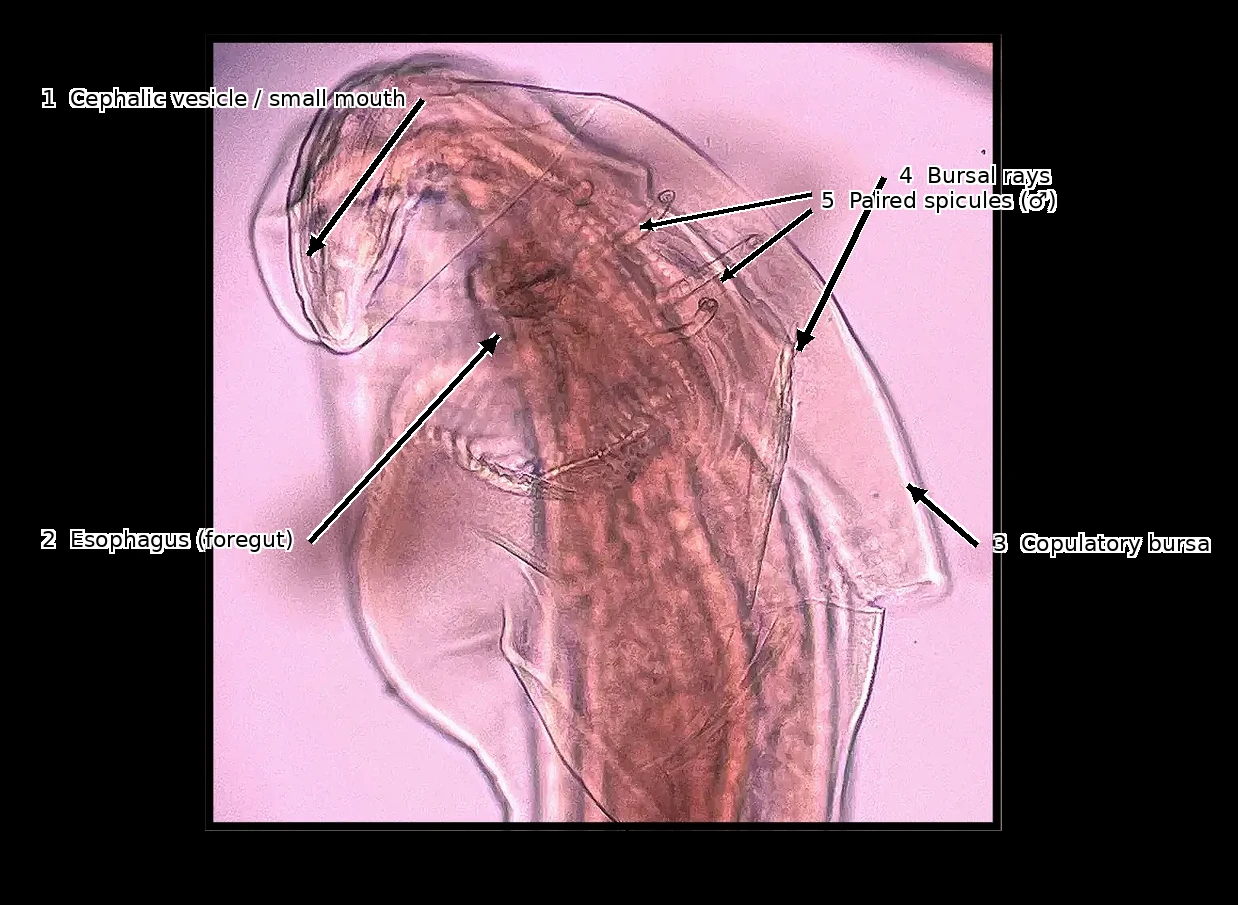
This anterior view opens the SEPS digital collection—and captures the central purpose of SEPS: making parasite morphology visible, interpretable, and enduring.
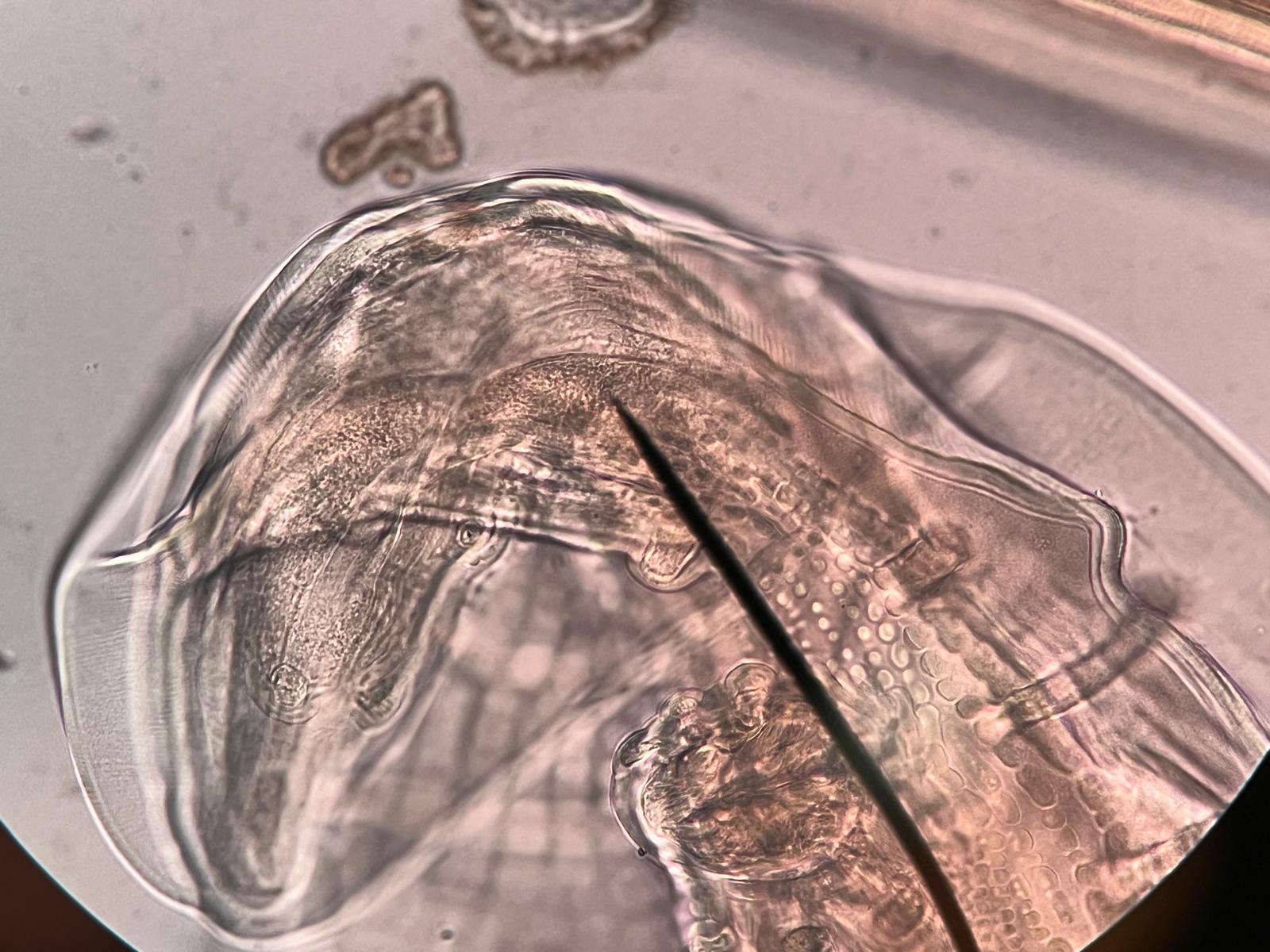
Public specimen pages will pair gallery-quality imagery with scientific versions retaining scale, annotation, preparation details, host context, evidence status, and voucher linkage whenever available.
Read the SEPS imaging approach ↗
Research program
Field evidence, specimens, and evolutionary questions.
SEPS studies parasite diversity and movement across hosts and landscapes, with particular attention to invasive systems, emerging risks, and the diagnostic morphology needed to recognize them.
The digital collection
A visual reference built to last.
Scale, labels, annotations, metadata, and review state retained.
What supports an interpretation—and what still limits it.
Research instruments
Software serves the specimen—not the other way around.
SEPS computational tools organize images, localize structures, preserve uncertainty, and support expert review.
TEGUMENT
Connects acquired images, context, review state, and versioned derivatives.
HookFuse
Brings selected structures, life stage, orientation, and specimen context into one review surface.
FUZZARIA
Weights evidence, preserves limitations, and helps prioritize expert review.
FieldView
Mobile-first capture for ectoparasite observations, host context, raw field imagery, and reviewable evidence.
Swipe or drag sideways4 modules
Open the full software suite ↗
Help build the reference collection parasites deserve.
SEPS welcomes collaboration with taxonomists, museums, field biologists, microscopists, veterinarians, molecular laboratories, agencies, educators, and students.
Research program
Parasite systematics across organisms, images, and ecosystems.
Documenting how parasite form, host association, life stage, and movement become quantitative, reviewable evidence.
Parasite biodiversity discovery
Diagnostic morphology, high-resolution imaging, specimen metadata, and voucher linkage support evaluation of poorly characterized morphotypes, locality records, host associations, and candidate diversity.
Invasive species & parasite movement
SEPS distinguishes co-introduction, enemy release, native-parasite acquisition, host switching, spillover, and plausible spillback pathways rather than treating every novel association as the same process.
Host–parasite ecology & coinfection
Host identity, size, sex, condition, habitat, season, infection site, richness, intensity, and coinfection structure remain connected to the underlying specimen records.
Quantitative morphology
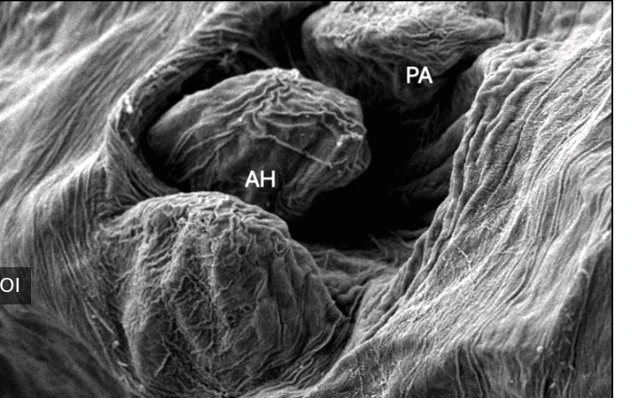
Landmarks, outlines, hook geometry, annulation, body proportions, attachment structures, and surface texture are compared only when orientation, scale, and processing history are controlled.
Progressing morphology
From descriptive characters to trajectories.
A single striking specimen is not a developmental series. Replication, standardized views, calibration, and repeatability remain the gatekeepers.
Length-to-width relationships, outline, regional proportions, annulation, and curvature.
Hook or sucker geometry, spacing, curvature, insertion angle, and asymmetry.
Surface texture and microstructure add evidence but never rescue an inadequate diagnostic view.
Diagnostic imaging
Acquire the structure before measuring it.
Useful images are not automatically diagnostic. Orientation, completeness, scale, focal plane, and visible character support determine what a record can responsibly say.
Parasite burden is more informative when the host is measured too.
SEPS evaluates condition metrics alongside body size, sex, season, site, reproductive state, and species-specific allometry. Association is reported before mechanism is implied.
PrevalenceProportion of hosts infectedIntensityParasites per infected hostConditionValidated host-state estimate
Active and emerging projects
Questions large enough to matter. Claims narrow enough to defend.
SEPS organizes projects around biological questions, specimen evidence, and explicit validation gates.
Archive active
Analysis in progress
Validation required
Long-term program
Pentastome comparison and host movement
Comparative records integrate host identity, anatomical site, life stage, prevalence, intensity, richness, coinfection, morphology, voucher status, and confirmation evidence.
Core question
Which associations represent co-introduction, spillover, native-parasite acquisition, host switching, or a plausible spillback pathway?
Apex predators: alligator × Burmese python
A comparative analysis of parasite burden, body condition, sex, size, season, site, and necropsy context in two iconic South Florida predators.
Core question
Does burden track host condition, and can any apparent difference survive species-specific allometry and seasonal confounding?
Progressing pentastome morphology
Replicated early, intermediate, and mature forms are measured through calibrated outlines, hook geometry, annulation, body proportions, and surface features.
Core question
Which morphological changes are developmental, allometric, host-associated, or taxonomically informative?
Recall-first microscope-field localization
A candidate-proposal system is evaluated by field-level recall, review burden, category capture, failure modes, and external challenge performance—not inflated diagnostic language.
Core question
Can heterogeneous fields be triaged reliably enough to make expert review faster without hiding misses?
Early detection and rapid response
The Everglades Boa imperator case connects field detection, rapid coordination, morphology, genetics, necropsy, and ecological context.
Core question
What evidence and response architecture turns a rare detection into an actionable, defensible case study?
South Florida specimen–image atlas
A durable regional archive linking hosts, collection events, parasite specimens, images, measurements, vouchers, sequences, review status, and publications.
Core question
Can scattered records become a surveillance network without losing taxonomic or specimen-level context?
Imaging & methods
Make morphology visible, measurable, and traceable.
The image is evidence only when acquisition, specimen, scale, processing, and interpretation stay connected.
Specimen first
Host, locality, infection site, preparation, life stage, voucher status, and physical specimen remain the center of the record.
Raw image preserved
Original files remain immutable while crops, masks, annotations, measurements, and enhanced derivatives are versioned.
Limits retained
Missing scale, incomplete views, damage, debris, focus limitations, and uncertainty remain visible rather than edited away.
Specimen-to-evidence path
One continuous chain.
- 01Field & host recordLocality, date, host context, condition, and collection event.
- 02Recovery & preservationAnatomical site, parasite count, life stage, preparation, and voucher pathway.
- 03Image acquisitionWhole body, diagnostic regions, scale, orientation, focal plane, and instrument metadata.
- 04Derived evidenceVersioned crops, masks, landmarks, measurements, annotations, and quality flags.
- 05Expert reviewInterpretation, limitations, comparison, and confirmation status.
Public collection modes
One specimen. More than one honest view.
See the organism.
Composed imagery for discovery, education, and visual orientation.
Read the record.
Scale, labels, acquisition details, specimen context, and versioned derivatives retained.
Know the limits.
Visible support, conflicts, missing views, review state, and permissible claim strength.
Operational companion
Test the image before the interpretation.
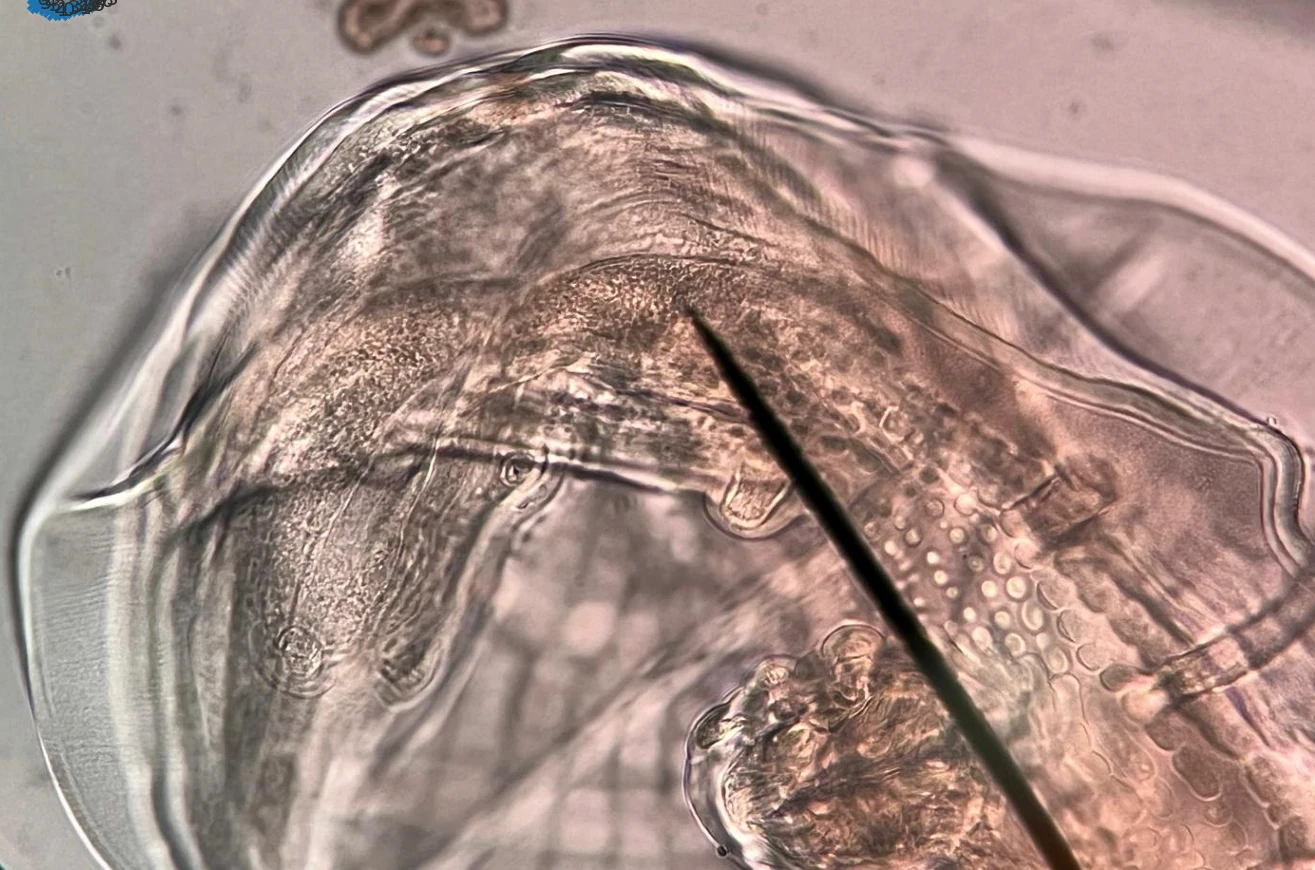
SEPS Lens checks focus signal, exposure, contrast, structure, segmentation readiness, and record integrity on the device in your hand.
SEPS Lens · browser-native image evidence
See what the image can support.
See what the image can support.
Keep the limits visible.
Real computer-vision measurements and fuzzy evidence rules run locally. The result is an image-readiness assessment—not an organism identification.
On-deviceNo uploadNo autonomous ID
01
Acquire
Bring in the image.
Runs the entire analysis chain with a bundled real microscope image.
02
Inspect
Interrogate the pixels.
Measuring image evidence…
03
Reason
Fuzzy score. Explicit caps.
0/100
Awaiting image
No evidence assessment yet.
Load an image to calculate a transparent, non-diagnostic image-readiness score.
- Analysis pending.
- Analysis pending.
Open the decision trace +
Local history
Recent evidence checks.
Only scans you explicitly save appear here. They stay on this device until browser data is cleared.
No saved scans yet.Your first locally saved assessment will appear here.
The boundary matters
Image quality is not taxonomic certainty.
SEPS Lens evaluates whether pixels are suitable for morphological review. It does not replace keys, vouchers, scale, host and locality context, literature, molecular confirmation when appropriate, or expert interpretation.
The wider SEPS program
Built from fieldwork, necropsy, microscopy, and iteration.
An independent, morphology-first research organization focused on parasite diversity, host–parasite movement, specimen-linked evidence, and responsible computational support.
Not a black-box diagnostic service.
Computational methods entered because the archive became too large and heterogeneous to manage consistently by hand. Their role remains bounded: organize, localize, measure, compare, and document—while expert interpretation retains final authority.
Maximize the scientific record each specimen can support, preserve vouchers, and avoid unnecessary collection.
Keys, type material, published descriptions, expert review, and formal nomenclature remain the basis of defensible identification.
Unknown, incomplete, damaged, and conflicting records are valid outcomes—not failures to hide.
Named evidence architecture
TEGUMENT · HookFuse · FUZZARIA
Named public modules. Conservative claims. Production logic remains protected.
Raw images, context, quality state, and versioned outputs stay connected.
Selected diagnostic structures are evaluated with life stage, scale, and orientation.
Evidence strength and reasons to withhold a claim travel together.

Keep SEPS with you
Install SEPS Mobile.
Add this companion to your home screen for a full-screen, offline-ready experience.
On iPhone or iPad: tap Share, then “Add to Home Screen.”