
Evidence should be visible, versioned, and difficult to overstate.
Selected development results are shown with their limits. Biological images are acquired microscopy records; charts and overlays are derived from data.
Alpha 2C: a localization component with a locked final test.
The reference dataset contains 779 microscope fields and 1,620 annotations across 13 source categories. Partitions are field-level, and the 117-field final test has not been used for selection.
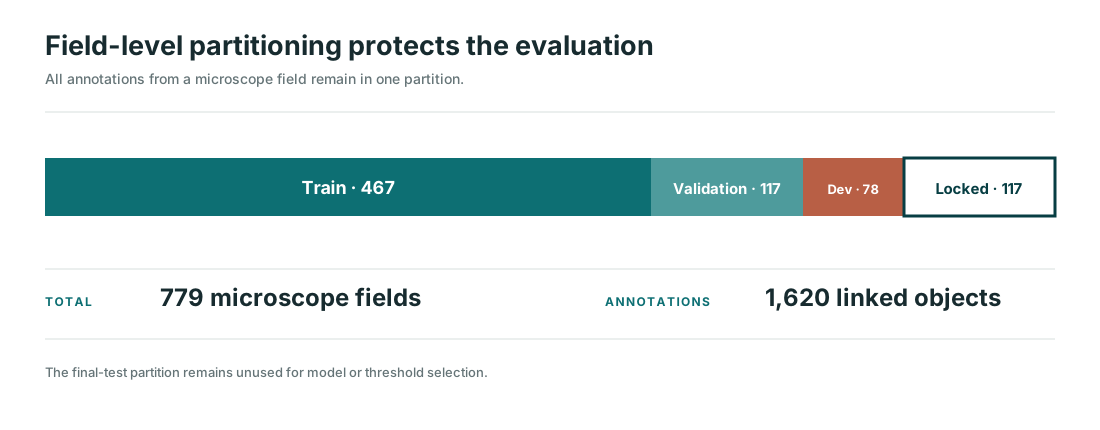
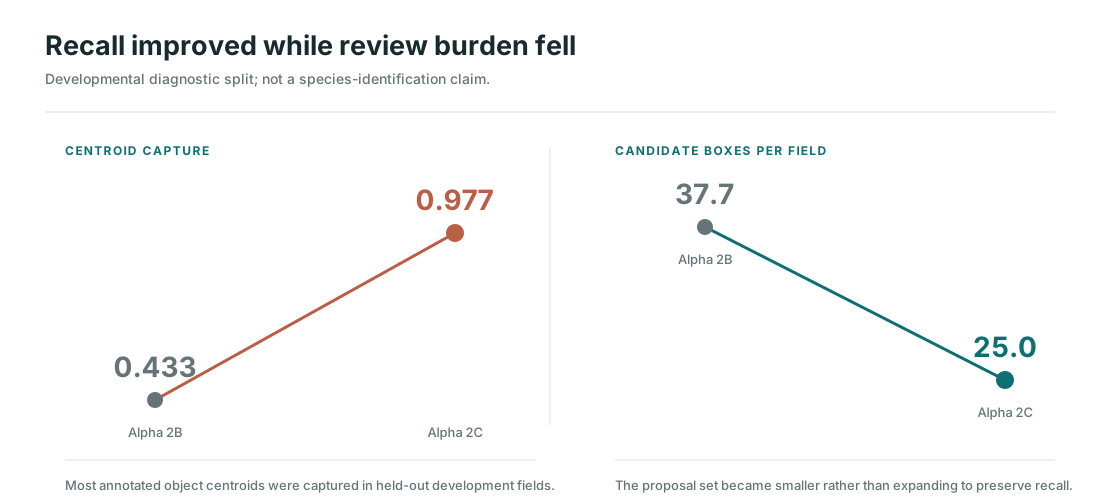
These results support candidate localization only. They do not establish species identification, segmentation accuracy, clinical performance, or final generalization.
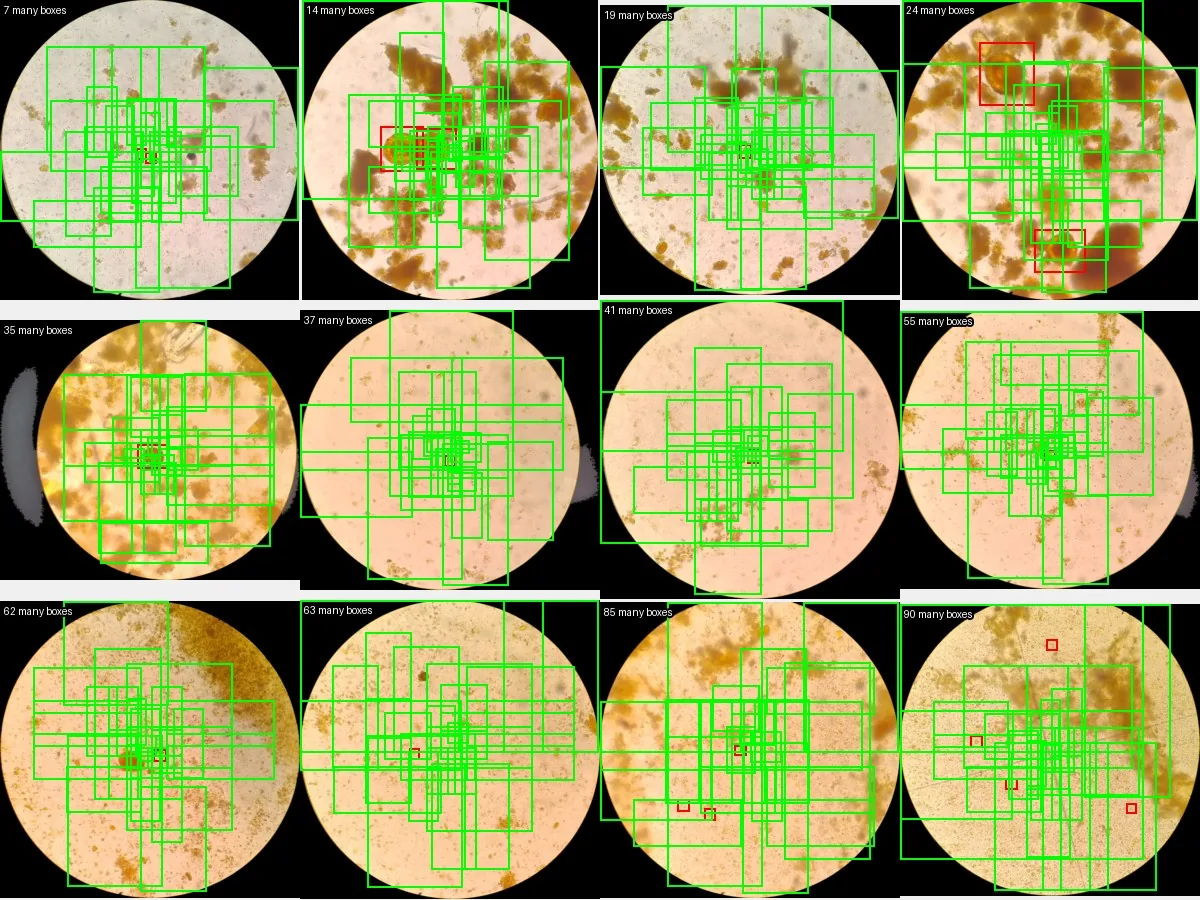
Good, partial, missed, and over-proposed fields all matter.
Contact sheets are retained because aggregate metrics can hide systematic problems: small objects, weak contrast, clutter, border effects, look-alike debris, overlapping objects, and fields that produce too many candidates.
Those failure classes inform the next acquisition round and prevent the public narrative from being built only from visually satisfying examples.
One specimen, one portable evidence package.
The long-term deliverable is a specimen-level record that can be audited and reinterpreted as methods improve.
Primary evidence
Host and collection event, specimen and voucher IDs, raw images, infection site, preservation, and acquisition metadata.
Derived evidence
Candidate regions, masks, landmarks, outlines, measurements, shape variables, image-quality notes, and comparison material.
Interpretation
Evidence tier, visible characters, uncertainty flags, allowable language, reviewer decision, and molecular status when available. FAME, FLAME, VOID, HookFuse, and FUZZARIA states may travel with the record without becoming the biological result.
The image is only the beginning of the record.
Orientation, scale, specimen linkage, and review status determine whether a visible structure can support comparison, measurement, or only a cautious note.
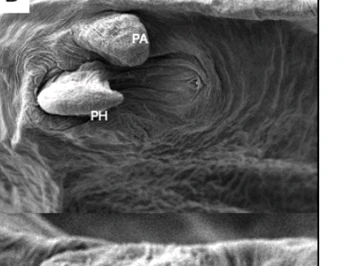
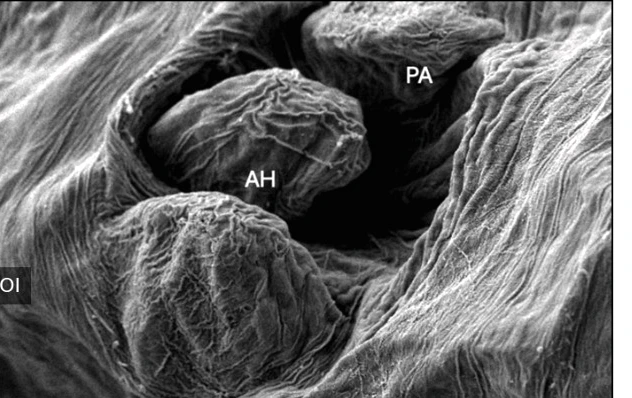
These SEM crops show how whole-region context and finer attachment morphology can be retained as separate but linked views. Public figures remain intentionally less specific than the internal review record.
See the V10 evidence surfaces →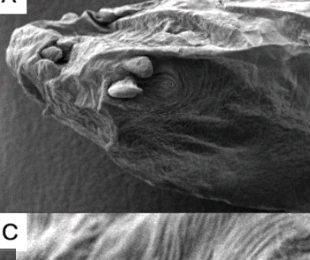
Curation tiers—not biological grades.
Gold and Iron are internal review strata used to keep reference-quality evidence separate from material that expands coverage, challenges assumptions, or requires additional review.
Selected outputs in development.
Introduced reptile parasite communities
Host-level prevalence, richness, intensity, coinfection, season, body size, and habitat context after dataset reconciliation.
Potential native-pentastome acquisition
A voucher-first assessment of a candidate host switch in an introduced reptile.
Progressing morphology
Replicated developmental or size-related trajectories in body and attachment-structure geometry.
Recall-first full-field localization
Field-level partitioning, review burden, failure taxonomy, and external challenge testing.
Boa imperator in Everglades National Park
A separate early-detection and rapid-response case study integrating field discovery, morphology, genetics, necropsy, and management response.
TEGUMENT–HookFuse–FUZZARIA
A later synthesis paper on evidence standardization, uncertainty, review, and morphology-first computational support.